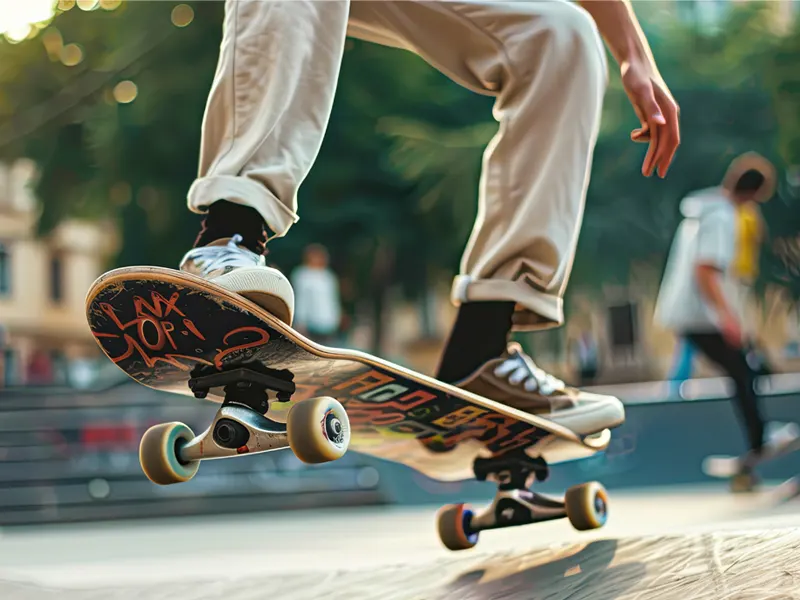
Yesterday, I had the remarkable experience of witnessing the final event of women’s skateboarding, and it was a truly heartwarming spectacle. The energy, passion, and camaraderie displayed by these young athletes were nothing short of inspiring. It was a moment that will stay with me forever—something genuinely unique and eye-opening. As I watched these teenage girls compete at the highest level, I couldn’t help but reflect on how much we, as adults, can learn from them.
The Tokyo Olympics marked the debut of skateboarding as an Olympic sport, and the event quickly became a highlight, showcasing the incredible talent and determination of these young athletes. The competitors were judged on several criteria, including the difficulty, originality, style, execution, and flow of their tricks. Let’s take a closer look at what each of these judging criteria entails:
As I reviewed the list of finalists, I was struck by the diversity in their ages. The oldest competitor was Brazil’s Dora Varella, who was 23 years old, while the youngest was Finland’s Lizzie Sirvio, who was just 13. The eventual gold medalist, Arisa Trew, had an unexpected journey to victory. During her first round, she fell—a moment that could have easily shattered her confidence. Yet, she recovered magnificently, ultimately winning the gold medal.
Among the other standout competitors was Sky Brown, a 16-year-old prodigy who had already earned a bronze medal in skateboarding at the Tokyo Olympics. She once again proved her mettle by securing another bronze in Paris. Sky is no stranger to success, having won the American TV show “Dancing with the Stars: Juniors”. Her accomplishments both on and off the skateboard are a testament to her extraordinary talent and determination.
What struck me most about these young athletes was not just their incredible skills but the profound sense of camaraderie they displayed throughout the competition. Despite their youth, these kids exhibited a level of sportsmanship that is often lacking in adult competitions. When one of them fell, they didn’t let the disappointment show on their faces; instead, they smiled, brushed it off, and kept going. Even more touching was the way their competitors supported them during these moments. They offered comforting words, patted each other on the back, and cheered each other on. It was a beautiful display of solidarity, proving that competition doesn’t have to be cutthroat to be meaningful.
In one particularly memorable moment, an athlete who had fallen in the first round ended up winning a medal. This outcome was a powerful reminder that in skateboarding, as in life, setbacks do not define us. What matters most is how we respond to those setbacks. In this competition, out of the three performances each skateboarder delivered, only the best one counted. This rule gave the athletes the opportunity to recover from mistakes and perform at their best without being weighed down by previous failures.
Watching these young athletes, I was reminded of the invaluable life lessons that sports can teach us. The resilience these girls showed in the face of adversity was inspiring. They didn’t dwell on their mistakes or let them dictate the outcome of their performance. Instead, they bounced back with determination, ready to give it their all. Their attitude toward competition was equally refreshing. They celebrated each other’s successes and provided support during difficult moments, embodying the true spirit of sportsmanship.
Moreover, the joy they found in their sport was palpable. You could see it in their smiles, their interactions with each other, and the way they moved on their boards. They weren’t just competing for medals; they were doing something they genuinely loved. This passion was infectious, spreading through the crowd and reminding everyone that at the heart of any sport, there should always be a love for the game. In conclusion, the final event of women’s skateboarding was not just a competition; it was a celebration of resilience, sportsmanship, and joy. These young athletes, with their remarkable talent and unwavering spirit, provided a powerful lesson for all of us. They reminded us that no matter our age, we can always learn and grow from the challenges we face. Their camaraderie, determination, and love for their sport set an example that transcends the boundaries of age and experience, offering a glimpse of what true sportsmanship looks like.