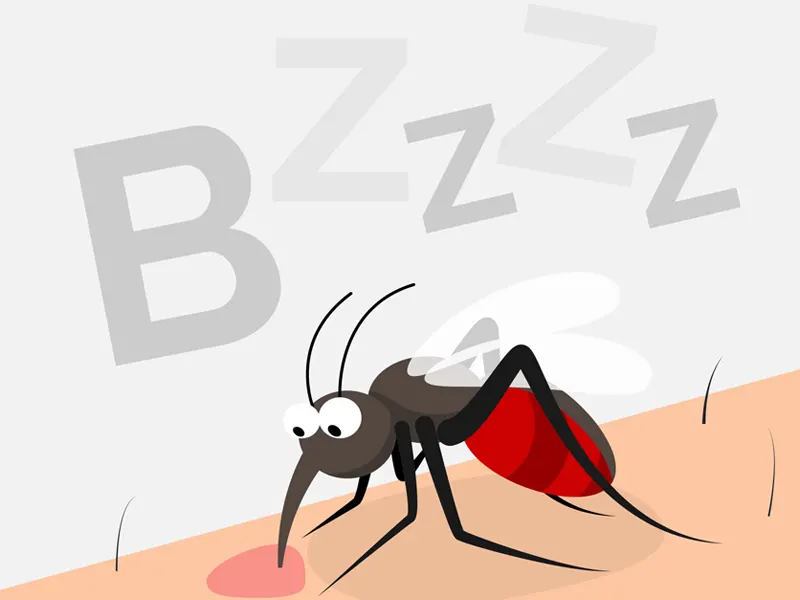
As I lay in bed that night, the room cloaked in darkness and heavy silence, a faint, high-pitched whine drifted past my ear. My heart sank at once. It was a sound all too familiar, a sound that signaled a sleepless night ahead. I froze beneath the thin sheet, my senses heightened, straining to catch the sound again. But like a phantom, the mosquito had already vanished into the shadows, its tiny body hidden from sight, but its presence still felt. I turned on my side, hoping the creature had lost interest and moved on to another target. Just as sleep began to wrap its soothing arms around me, the whine returned—closer now, more insistent, more determined.
Before I could swat at the invisible menace, I felt it: the sharp, fleeting sting on my arm. A tiny prick, almost imperceptible, yet powerful enough to send a wave of irritation rippling through my drowsy haze. My hand shot out instinctively, slapping at the spot, but it was too late. The mosquito had already disappeared into the night, leaving behind only a burning itch and the certainty that my battle with sleep was far from over. This isn’t just my story. It’s a shared experience, a universal annoyance that has united humanity across cultures, borders, and time. From ancient civilizations to the modern era, the whine of a mosquito has been a symbol of frustration, a tiny sound that commands our full attention in the dark.
But beyond the irritation and sleepless nights lies a more sinister truth. Mosquitoes are not merely pesky creatures; they are, by many measures, the deadliest animals on Earth. It isn’t the bite itself that earns them this dark title. It’s the diseases they spread. Malaria, dengue fever, Zika virus, chikungunya, yellow fever, West Nile virus—the list is long and devastating. Every year, mosquitoes are responsible for the deaths of an estimated 700,000 to 1 million people worldwide. The toll they take on humanity is staggering, with billions more affected by illness, disability, and economic hardship caused by mosquito-borne diseases.
Our fight against this tiny adversary has evolved over time. I remember, as a child, my first weapons of defense: mosquito repellent cream, thick and greasy but effective for a while. Then came mosquito coils—those spirals of burning chemical-laden smoke that filled the room with a pungent scent and a haze that made breathing uncomfortable. Yet, desperate for a night’s peace, we endured it. Next, technology gifted us the mosquito repellent liquid vaporizer—a convenient device that plugged into the wall, releasing its invisible shield against the bloodthirsty intruders. For many, these innovations offered some relief. But for me, they brought new challenges. I became allergic to the smoke of coils and the chemicals in vaporizers. My skin reacted, my throat itched, my sleep was disturbed not by the mosquito, but by my body’s rebellion against the very tools meant to protect me.
So I returned to my humble mosquito repellent cream, applying it in careful layers whenever needed. And then came a new ally in our war against mosquitoes: the air conditioner. With its cool breeze, it allowed us to sleep under blankets even during the sweltering heat of summer. The blanket, once discarded in hot months, became my shield. I would cocoon myself, leaving no inch of skin exposed to the night’s marauders. The hum of the AC drowned out the whine of the mosquito, or at least made it easier to ignore.
Yet, despite all these defenses, I found myself developing my own techniques over time. I became a hunter of the night, using the mosquito’s own weapons—the whine, the bite—as clues. I learned to track them in the dark, to anticipate their movements, to sense their presence even when they hovered silently. My ears became attuned to the faintest of sounds, my reflexes sharpened by countless sleepless nights. In the battle between human and mosquito, I became more adept, more patient, more determined.
But then something strange happened. I noticed that the whine—the telltale sound that had for so long announced the mosquito’s presence—had begun to fade. Nights passed in eerie silence, yet the bites still came. The high-pitched whine that once served as my early warning system was gone. I don’t know why this change occurred. Perhaps evolution holds the answer. Could it be that mosquitoes, over generations, have adapted to become stealthier, to silence their warning cry so they might feed undetected?
Another curious observation added to this mystery. I began to see mosquitoes active during conditions that would have once kept them at bay. The searing heat of summer, when the land baked under a relentless sun and even the breeze seemed to carry fire—these were not times when I expected to see mosquitoes. And yet, they persisted. They flew through heatwaves, undeterred by temperatures that drove most creatures to seek shelter. I wondered if this too was a sign of evolution, of adaptation to a changing world. Climate change, urbanization, the destruction of natural habitats—perhaps these forces have shaped a new kind of mosquito, one that defies the rules we thought we knew.
Our relationship with mosquitoes is as old as humanity itself. Ancient texts speak of their nuisance. In medieval times, kings and commoners alike sought ways to ward them off, burning herbs, hanging nets, or retreating to high towers. Today, we have sophisticated repellents, genetic engineering projects aimed at controlling their populations, and vaccines to shield us from some of the diseases they carry. And yet, the battle continues. The mosquito remains resilient, a reminder that nature’s smallest creatures often wield the greatest power.
What fascinates me most is how this tiny insect, with its fragile body and delicate wings, has shaped human history. Entire regions have been marked by the scourge of mosquito-borne diseases. Wars have been influenced by outbreaks of malaria. Economies have been strained under the burden of healthcare costs and lost productivity. Families have been devastated by the loss of loved ones. All because of a creature we can barely see, a creature that announces itself with a simple whine in the dark.
In my own small way, I have learned to respect the mosquito. Not for its bite, not for its nuisance, but for its remarkable place in the web of life. It has survived against our best efforts to control it. It has adapted to our weapons, our poisons, our barriers. It forces us to innovate, to think, to strive for solutions that protect without harming, that balance our needs with the health of the ecosystems we inhabit.
The whine of a mosquito is no longer just a sound that keeps me awake. It is a symbol—a reminder of the complex dance between humans and nature. It teaches patience, vigilance, and humility. And though I may still slap at the burning itch it leaves behind, I do so with a newfound awareness of the mosquito’s place in the world, and my own.
As I drift into sleep on nights when the room is cool and still, I think of that whine, and of all it represents. And I wonder what the future holds for this ancient rivalry, this nightly battle that plays out in bedrooms around the globe. One thing is certain: the mosquito, silent or singing, will always find a way to remind us of its presence, and of the fragile line between annoyance and danger that its tiny wings so effortlessly cross.