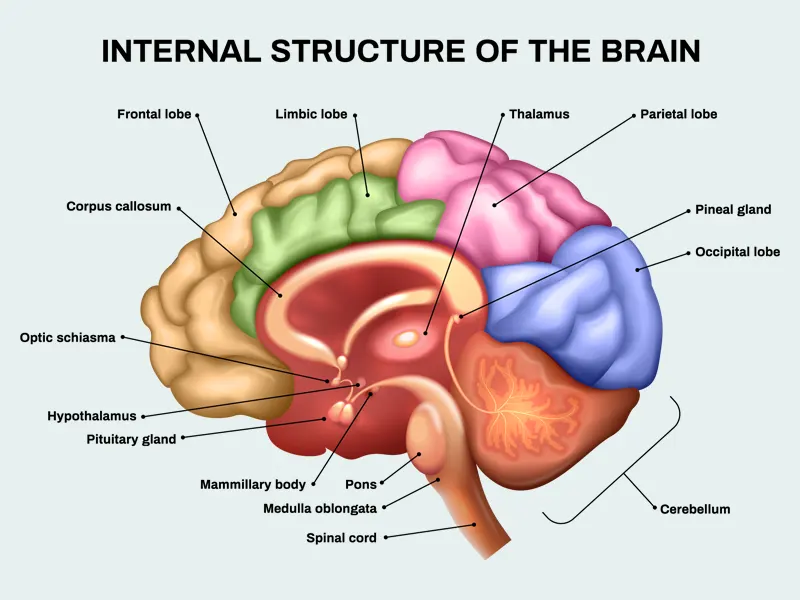
The human brain is an intricate organ, housing the capabilities that define our existence. Among its many parts, the temporal lobes play a crucial role in various cognitive functions, particularly in relation to language, memory, and emotions. The left temporal lobe, in particular, is essential for processing auditory information and language, as well as for forming and retrieving verbal memories. However, when the left temporal lobe is afflicted by epilepsy, a fascinating intersection between neurology and spirituality emerges. This intersection has sparked much debate and research, particularly in understanding how seizures originating from this region can lead to profound spiritual experiences.
Understanding the Left Temporal Lobe
The temporal lobes are located on the sides of the brain, just above the ears, and are primarily involved in processing sensory input and encoding memory. The left temporal lobe, specifically, is closely associated with language comprehension and production. It is home to regions such as Wernicke’s area, which is critical for understanding spoken language, and the hippocampus, which plays a significant role in the formation of long-term memories.
Damage or dysfunction in the left temporal lobe can lead to a variety of cognitive impairments, particularly in language and memory. For instance, individuals with left temporal lobe damage may experience difficulties in understanding spoken language, recalling words, or forming new verbal memories. In some cases, such damage can also lead to epilepsy, a neurological disorder characterized by recurrent, unprovoked seizures.
Temporal Lobe Epilepsy: A Neurological Condition
Temporal lobe epilepsy (TLE) is the most common form of epilepsy, accounting for approximately 60% of all epilepsy cases. It is characterized by seizures that originate in the temporal lobes, either on the left or right side of the brain. These seizures can be complex partial seizures, where consciousness is impaired, or simple partial seizures, where the person remains conscious.
In the context of the left temporal lobe, epilepsy often manifests through symptoms related to language and memory disturbances. During a seizure, individuals may experience a range of symptoms, including déjà vu, auditory hallucinations, or a sudden, overwhelming sense of fear. They may also have difficulty speaking or understanding language, depending on the specific regions of the left temporal lobe affected by the seizure.
Interestingly, many individuals with TLE report experiencing vivid and intense spiritual or religious experiences during their seizures. This phenomenon has led to significant interest among neuroscientists, psychologists, and even theologians, as it raises intriguing questions about the relationship between brain function and spiritual experiences.
The Connection Between Epilepsy and Spiritual Experience
The link between epilepsy, particularly TLE, and spiritual experiences has been recognized for centuries. Historical records suggest that several religious figures, including St. Paul and Joan of Arc, may have had epilepsy, and their mystical experiences have been interpreted by some as seizure-related phenomena. In modern times, this connection has been explored through scientific research, which has provided insights into how epilepsy can influence spiritual experiences.
One of the most compelling theories in this regard is that seizures in the left temporal lobe may disrupt normal brain activity in a way that produces altered states of consciousness. These altered states can include feelings of transcendence, unity with the universe, or direct communication with a higher power. For some individuals, these experiences are so profound that they become the cornerstone of their spiritual beliefs.
Research has shown that during a temporal lobe seizure, there is abnormal electrical activity in the brain, which can lead to hyperactivity in certain neural circuits. This hyperactivity may stimulate regions of the brain involved in processing emotions and religious experiences. For example, the amygdala, which is involved in emotional processing, is located near the temporal lobe and may be activated during a seizure, leading to intense emotional and spiritual experiences.
In addition to seizure-induced experiences, some individuals with TLE exhibit a personality trait known as “hyper-religiosity,” which is characterized by an intense preoccupation with religious or spiritual matters. This trait has been observed in both historical figures and modern patients with TLE, further suggesting a link between the temporal lobe and spiritual experience.
The Role of the Left Temporal Lobe in Language and Spirituality
The left temporal lobe’s involvement in language processing adds another layer of complexity to the relationship between epilepsy and spiritual experiences. Language is a powerful tool for expressing and interpreting spiritual beliefs. During a seizure, disruptions in the left temporal lobe may alter how individuals perceive or articulate their spiritual experiences.
For instance, some people with TLE report hearing voices or experiencing auditory hallucinations during seizures. These voices may be perceived as divine communication, reinforcing the individual’s spiritual beliefs. In other cases, the inability to speak or understand language during a seizure may be interpreted as a mystical experience, where the person feels a sense of being in the presence of the divine, beyond the limitations of human language.
Furthermore, the left temporal lobe’s role in memory formation may influence how spiritual experiences are remembered and integrated into an individual’s belief system. A seizure that triggers a profound spiritual experience may leave a lasting impression on the individual’s memory, reinforcing the significance of the event and shaping their spiritual identity.
Implications for Understanding Spirituality and the Brain
The connection between the left temporal lobe, epilepsy, and spiritual experiences has significant implications for our understanding of both spirituality and brain function. It challenges the traditional view that spiritual experiences are purely metaphysical and suggests that they may have a neurobiological basis.
This perspective does not necessarily diminish the value or authenticity of spiritual experiences. Rather, it provides a framework for understanding how the brain can generate such experiences and how they can be deeply meaningful for individuals. It also opens up new avenues for research into the neurological underpinnings of spirituality and how different brain regions contribute to various aspects of religious experience.
For clinicians and researchers, understanding the link between epilepsy and spiritual experiences is crucial for providing comprehensive care to individuals with TLE. It can help in addressing the psychological and emotional aspects of the disorder, as well as in offering support for those who may be struggling with the spiritual implications of their condition.
Conclusion
The left temporal lobe, epilepsy, and spiritual experience form a fascinating triad that highlights the complex interplay between brain function and human consciousness. Temporal lobe epilepsy, particularly when it involves the left hemisphere, can lead to profound spiritual experiences that challenge our understanding of the mind and its connection to the divine. As research in this area continues to evolve, it will undoubtedly deepen our understanding of the brain’s role in shaping our spiritual lives and provide new insights into the nature of consciousness itself.
This is only one aspect of spiritual experience. There are different aspects of it as experienced by Buddha and many more intellectual beings. I will try to explain those aspects based on my understanding.