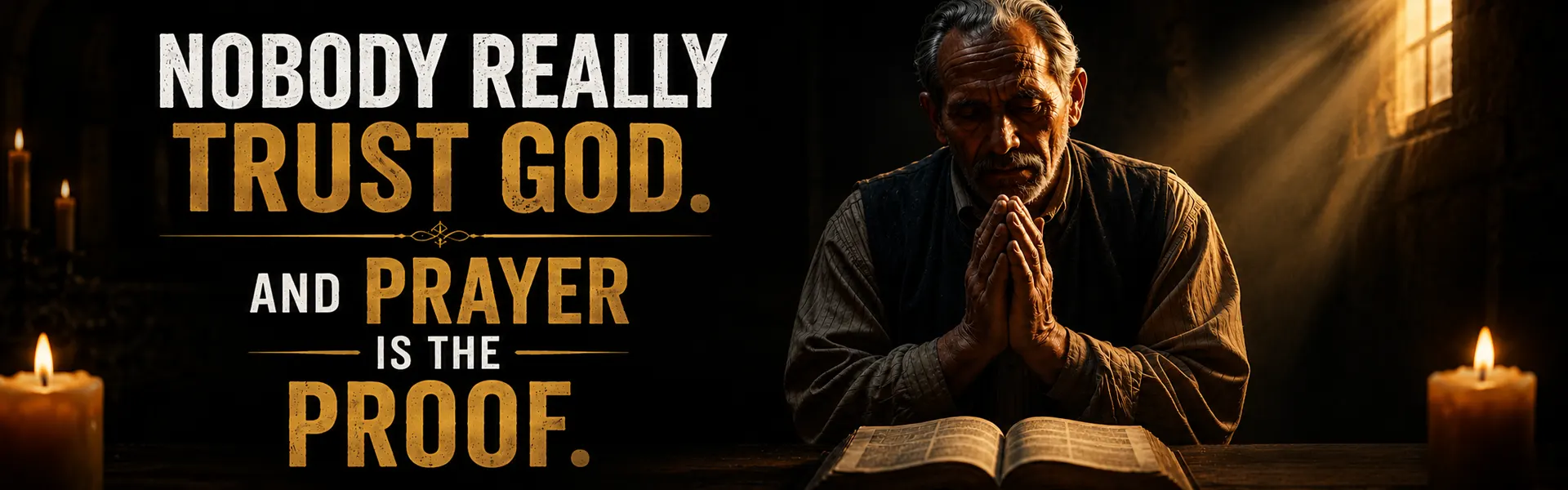
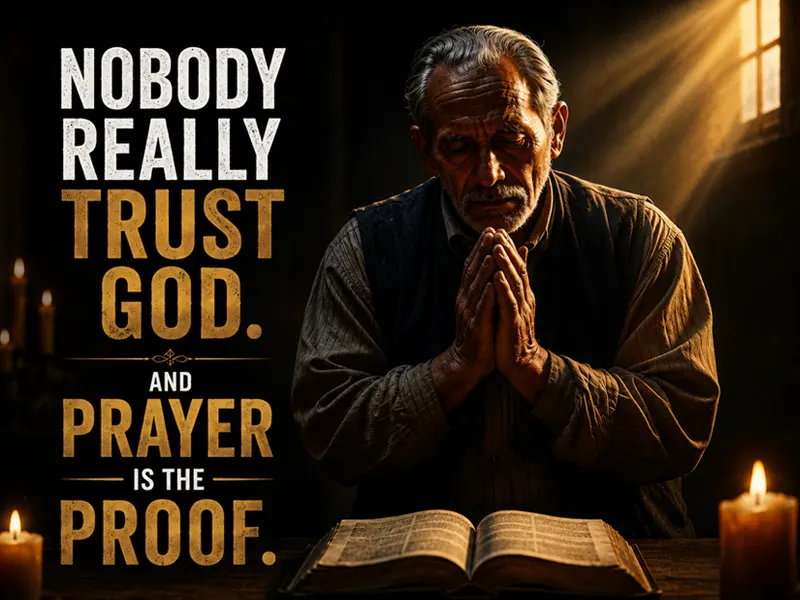
Every morning, millions of people fold their hands, close their eyes, and begin to explain their situation to God. They tell him about the exam tomorrow, the hospital bill, the job interview, the broken relationship. They ask him to intervene. They bargain, they plead, they remind him of their devotion as if he might have forgotten.
And yet — the same people will tell you, without hesitation, that God is all-knowing. Omniscient. That he sees everything, knows everything, and has a plan for everything. They believe this completely.
So here is the question nobody in the temple asks out loud: if God already knows everything — your fear, your need, the outcome he has already decided — what exactly are you telling him?
“Telling God your problems is like texting someone who already read your diary. The information isn’t new. The anxiety is.”
The contradiction at the heart of faith
Trust, in its purest form, means surrendering the outcome. It means believing that whoever is in charge has already accounted for your situation — and that your intervention is neither required nor useful. A child who truly trusts their parent doesn’t run into the room every five minutes to remind them of what needs to be done. They go to sleep.
But that is not what most religious practice looks like. What it looks like is negotiation. What it sounds like is anxiety dressed in devotion.
The belief vs. the behavior
What is claimedGod is all-knowing and already has a plan for me
What is doneSpending 20 minutes explaining the problem to him in detail
What is claimedGod loves unconditionally and acts in my best interest
What is doneOffering money, fasts, and rituals to change his mind
What is claimedHis will is supreme and whatever happens is meant to be
What is doneVisiting three temples to ensure the outcome we want
What is claimedI have complete faith in God
What is doneFeeling anxious until the prayer feels “received”
This is not an attack on faith
Let’s be precise about what this argument is not saying. It is not saying God doesn’t exist. It is not saying prayer is useless. It is not even saying religion is wrong. What it is saying is this: most of what we call faith is not trust — it is hope with good manners.
Hope is human. Hope is understandable. Hope is, honestly, rather beautiful. But hope is not the same as trust. Hope says “I want this to go well.” Trust says “I believe it will be handled — and I am at peace either way.” Very few people praying are at peace either way. That’s the tell.
Trust looks like peace
Real trust produces calm. If your prayer leaves you more anxious, you haven’t surrendered — you’ve just outsourced the worry.
Ritual is repetition of doubt
You don’t repeat something to someone you trust has heard you. Repeated prayer is repeated checking — which is the opposite of trust.
Bargaining reveals the gap
Offering fasts or donations in exchange for outcomes treats God like a vendor. No one bargains with someone they fully trust.
Why we ask anyway — and why that’s okay
Here is where the argument softens. Humans are not built for pure surrender. We are wired for agency — the need to do something when something needs to be done. Prayer, for most people, is not really a message to God. It is a message to themselves. It is a way of organizing fear, of naming what we need, of feeling less alone in the dark.
That is not nothing. That is, in fact, quite a lot. But we should be honest about what it is. It is a psychological tool. A deeply human ritual of self-soothing. When we dress it up as trust in an all-knowing being, we are doing two things at once: comforting ourselves, and quietly admitting we don’t fully believe he’s already on it.
“The most honest prayer might simply be: ‘I know you already know. I just needed to say it out loud for myself.'”
There is no shame in that. The shame is in pretending otherwise — in calling it trust when it is clearly, visibly, something else.
The thought to sit with
If God is everything religion claims him to be — all-knowing, all-loving, already at work — then the bravest form of faith is not the longest prayer. It is silence. It is going about your day without petitioning, without bargaining, without checking in. It is the faith of someone who genuinely believes the matter is already handled. Most of us aren’t there. And the fact that we’re not there is the most honest thing about us.